Virtual Production Studio: An Architect’s Guide to Building an LED Volume Stage in India
Virtual production has reshaped how Indian films, streaming series, and advertisements are shot. Mumbai and Hyderabad now host multiple virtual production stages; more are being planned across tier-1 and tier-2 cities. For architects, builders, and developers, this is a new building typology — one that combines the structural demands of a heavy industrial facility with the acoustic and environmental control of a broadcast studio.
This guide walks through what a virtual production studio actually is, the architecture and construction considerations unique to it, and a cost estimation framework you can use if a client approaches you to build one.
What is a virtual production studio?
A virtual production studio is a purpose-built sound stage where live-action footage is shot against high-resolution LED walls instead of green screens. The LED wall displays real-time computer-generated backgrounds rendered in sync with camera movement, allowing directors to capture final imagery on set instead of in post-production.
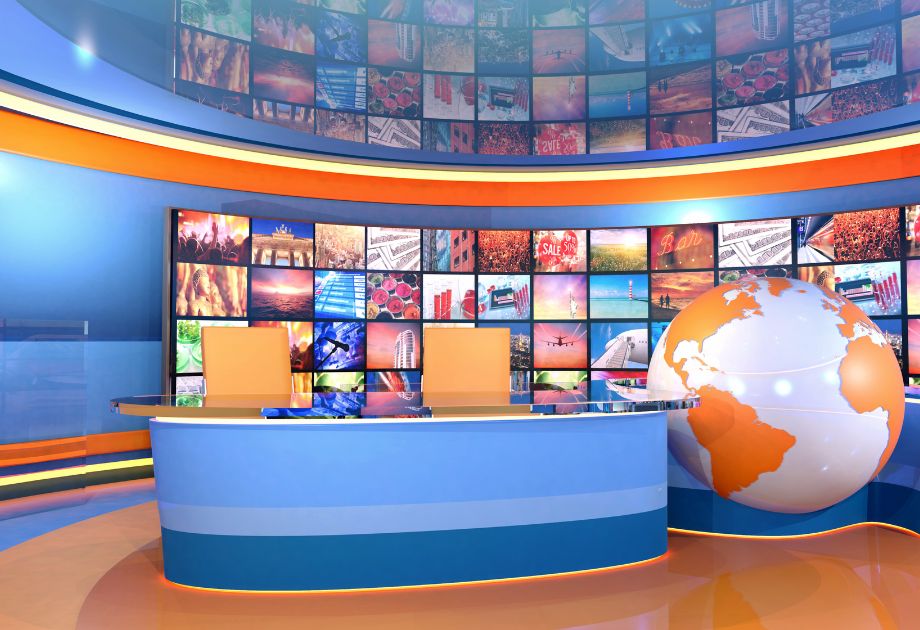
The defining component is the LED volume — the curved or wraparound arrangement of LED panels that surrounds the performance area. A typical volume includes:
- LED wall panels (1.5–2.9 mm pixel pitch for camera capture)
- Ceiling LED panels (for interactive lighting and reflections)
- Structural truss system to suspend panels and lighting
- Camera tracking system (optical or mechanical)
- Real-time rendering engine (Unreal Engine, Disguise, etc.)
- Render nodes (high-performance computing cluster)
- HVAC and acoustic infrastructure to support the above
If that reads like a list of building systems rather than film equipment, you’re starting to see the architectural challenge.
Why Indian architects need to understand this typology
Three forces are driving virtual production studio construction in India:
- Streaming platform demand. Netflix, Prime Video, and Indian platforms (JioCinema, ZEE5) are commissioning content at a pace that strains traditional location shooting. Virtual stages allow faster turnaround.
- Cost arbitrage. Building and operating a virtual production stage in India costs 40-60% less than equivalent facilities in Los Angeles, London, or Vancouver. International productions are noticing.
- Incentive alignment. Several Indian states (Maharashtra, Telangana, Gujarat) offer film infrastructure incentives that improve the IRR for purpose-built stages.
For architects and construction firms, this means client inquiries are increasing — from film production houses, real-estate developers diversifying into media infrastructure, and state industrial corporations building film city projects.
Structural design considerations
A virtual production studio is not a conventional sound stage. The structural loads, floor tolerance, and ceiling capacity all differ.
Floor load capacity
A standard LED volume wall weighs 80–120 kg per square metre of panel surface, plus the supporting truss and rigging. For a 270° wraparound volume 12 m wide × 6 m tall, the wall load alone can reach 8–12 tonnes, transferred through base plates to the floor slab.
The floor slab must be designed for:
- Point loads of 2,000–4,000 kg/m² at truss base plate locations
- Uniform live load of 1,500 kg/m² across the stage
- Floor flatness tolerance of FF 50/FL 35 (industry standard for camera dolly tracks and LED panel base alignment)
Standard industrial floor slabs (designed for 500 kg/m² live load) will not work. The slab must be upgraded — typically a 200 mm reinforced concrete slab on grade with steel-fibre dosing of 30 kg/m³, or a structural slab over piles if soil bearing capacity is low.
Ceiling grid
The ceiling structure must support:
- LED ceiling panels (60–80 kg/m²)
- Lighting rig (1,000–2,000 kg of moving heads and Fresnels)
- Cable trays and motorised hoists
- HVAC ducting and sprinkler lines
A typical specification is a 6 m clear height with a structural steel grid at 8 m, designed for a suspended load of 250 kg/m². The grid must allow flexible rigging points every 1 m × 1 m — not standard for industrial sheds.
Acoustic treatment
LED volumes generate noise from three sources: cooling fans in panels, rendering servers, and HVAC systems. Background noise must be NC-25 or lower (broadcast standard) for clean audio capture.
This requires:
- Acoustic absorption on at least 60% of wall surface (mineral wool panels behind perforated metal)
- Floating floor for the rendering server room (to isolate vibration)
- Sound locks at all stage entrances (double-door airlock with neoprene seals)
- HVAC silencers on supply and return ducts
Standard shed construction (corrugated steel walls, no acoustic treatment) is unusable.
HVAC and electrical infrastructure
Heat load
An LED volume generates 800–1,200 W of heat per square metre of panel surface when operating at full brightness. A 12 m × 6 m wall produces 60–85 kW of heat; ceiling panels add another 40–60 kW. Total stage heat load including lighting and servers can reach 200 kW for a mid-sized volume.
HVAC must be sized for this — typically 60 TR (tons of refrigeration) for a 500 sq m stage, with redundant compressors for fail-safe operation. Standard split or package AC units are insufficient; you need a chilled-water system with air handlers positioned to avoid creating airflow noise.
Electrical
Power demand for a mid-sized virtual production stage:
- LED panels: 150–250 kVA
- Lighting: 200–400 kVA
- Render farm and IT: 100–150 kVA
- HVAC: 100–150 kVA
- Misc (offices, support spaces): 50 kVA
Total connected load: 600–1,000 kVA. Plan for a dedicated transformer (11 kV/415 V, 1000 kVA) with diesel generator backup (500 kVA minimum) for uninterrupted shoots.
A UPS system sized for at least the LED volume and rendering cluster (150 kVA, 15-minute runtime) is essential — a power flicker mid-take destroys footage.
Construction cost estimation framework
Building a virtual production studio in India typically costs ₹8,000–14,000 per sq ft of stage area, depending on specification. This is significantly higher than conventional industrial construction (₹1,500–2,500/sq ft) but lower than international equivalents (₹25,000+/sq ft in Los Angeles or London).
A budget breakdown for a 500 sq m (5,400 sq ft) stage:
| Component | ₹/sq ft | Total (₹ lakh) | % of total |
|---|---|---|---|
| Civil and shell (slab, walls, roof) | 2,200 | 119 | 18% |
| Acoustic treatment | 1,400 | 76 | 12% |
| HVAC (chilled water, ducting, silencers) | 1,800 | 97 | 15% |
| Electrical (transformer, DG, UPS, distribution) | 1,500 | 81 | 12% |
| Structural steel grid (ceiling rigging) | 900 | 49 | 8% |
| Lighting and rigging infrastructure | 800 | 43 | 7% |
| Floor flatness treatment | 400 | 22 | 3% |
| Sound locks and doors | 500 | 27 | 4% |
| Fire suppression (FM200 or pre-action sprinkler) | 700 | 38 | 6% |
| Server room and IT infrastructure | 600 | 32 | 5% |
| Office and support spaces | 600 | 32 | 5% |
| Contingency (10%) | 1,000 | 54 | 5% |
| Total | ~12,400 | ~670 | 100% |
Note: this is for the building and infrastructure only — the LED panels, rendering hardware, and camera tracking systems are typically leased or procured separately by the production house.
The same methodology we use for residential construction cost estimation applies here: scope definition, city-wise material multipliers, finish-level bands, and contingency. The difference is the unit rates and the components.
For a quick ballpark estimate for your specific project, the Construction Cost Calculator can be adapted — but for studio projects above 500 sq m, engage a quantity surveyor with broadcast-facility experience.
Indian context: where these stages are being built
Three clusters are emerging:
- Mumbai (Film City, Goregaon) — Several virtual production stages operational or in construction, driven by Bollywood demand. Land costs push total project cost above the ₹14,000/sq ft benchmark.
- Hyderabad (Ramoji Film City, Madhapur) — Lower land costs and Tollywood demand make Hyderabad the most cost-effective Indian market for virtual stage construction. Total project cost typically ₹9,000–11,000/sq ft.
- Noida Film City (proposed expansion) — Uttar Pradesh’s proposed film city project includes allocated virtual production infrastructure. Construction costs will likely track Delhi NCR industrial rates.
For projects outside these clusters, expect a 15–25% premium on specialist labour (acoustic consultants, broadcast-experienced MEP engineers).
Common mistakes to avoid
In my review of three virtual production studio projects in India (two completed, one under construction), the same issues recur:
- Underestimating floor flatness requirements. Standard FF 25 floors cause visible misalignment in LED panel bases — rework costs ₹40–60 lakh on a 500 sq m stage.
- Insufficient HVAC redundancy. Single-compressor chilled-water systems fail; shoots stop. Specify N+1 redundancy minimum.
- Treating acoustic treatment as optional. One Mumbai project tried to skip acoustic absorption to save ₹35 lakh; the stage was unusable for sync sound and required ₹80 lakh of retrofit.
- Undersizing the electrical backbone. A 500 kVA transformer that worked for initial commissioning became inadequate when lighting was upgraded. Plan for 30% headroom.
- Ignoring the rendering server room. Heat, vibration, and power isolation for the render farm are not optional. One project located the render farm in a standard office AC environment — servers thermal-throttled within 4 months.
FAQ
Is a virtual production studio a viable project for a mid-sized Indian construction firm? Only if the firm has experience with industrial sheds, broadcast facilities, or cinema halls. The combination of structural, acoustic, and MEP requirements is specialised. For firms without this background, partner with a consultant who has broadcast-facility experience.
What’s the minimum viable stage size? For commercial viability (multiple productions per year), a 400–600 sq m stage with a 12 m × 6 m LED volume is the floor. Smaller stages are viable for advertising and corporate work but cannot host feature film or streaming series productions.
How long does construction take? 12–18 months from design freeze to commissioning, assuming permits are in place. The LED volume and rendering equipment installation is typically the critical path — order 6–8 months before handover.
Can I convert an existing industrial shed into a virtual production stage? Sometimes. The structural slab must be tested for load capacity; the ceiling height must be 7 m clear minimum; and the building envelope must allow acoustic treatment. Conversion is viable for 30% of existing sheds; the rest are cheaper to demolish and rebuild.
What’s the ROI for a developer building a virtual production stage? At Mumbai rental rates of ₹4–6 lakh per shoot day, a 500 sq m stage operating 200 days/year generates ₹8–12 crore in annual revenue. Construction cost of ₹6–8 crore means payback in 4–6 years — assuming stable demand.
Wrapping up
A virtual production studio is, fundamentally, a building — and that’s where architects and builders add value. The LED technology will change every 3–5 years; the building will stand for 40. Getting the structural, acoustic, HVAC, and electrical design right is what separates a usable stage from an expensive mistake.
If you’re approached to design or build one, treat it as you would any specialised industrial facility: define the scope precisely, benchmark costs against comparable projects, and engage specialist consultants early. The construction methodology we use for residential and commercial projects translates well — the difference is in the unit rates and the components.