Stitch Slab (Stitch Raft): Meaning, Uses and How It Works
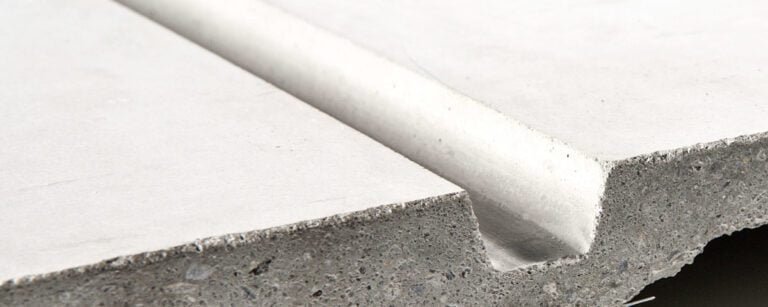
Stitch slab meaning: a stitch slab (also called a stitch, stitch raft or stitch strip) is a slab strip cast later to join two slabs or rafts that were built separately. Once it is poured and has gained strength, the two parts behave as one connected slab.
A stitch raft foundation ties two or more adjacent mat (raft) foundations together this way. You will also see the spellings “stich slab” and “stitch raft”. The idea is simple, the timing is what matters, and getting it wrong causes cracks. This guide covers the meaning, why it is used, how it is built, and how it differs from a pour strip and an expansion joint.
Last updated: 18 October 2026
Why a stitch slab is used
- Different loads settle by different amounts. A tall tower and its low podium, or an old block and a new one, settle unequally. Casting both fully joined from day one can crack the slab between them. The stitch is poured after most of that movement has happened.
- Phased construction. A basement or raft is built in sections because of site access, shoring or the pour size. The stitch closes the gap at the end.
- Working next to an existing structure. The new raft is built beside the old one and joined afterwards, so the old foundation is not disturbed during the main pour.
- Carrying horizontal force across a joint once the parts are meant to act together.
For general mat design see raft (mat) foundations.
Stitch slab in foundation: how it is built
- Leave a gap strip between the two rafts. Reinforcement from both sides is left projecting, or couplers are cast in, so the bars can be joined later.
- Wait. The strip stays open while the heavy part of the structure is built and most of its settlement and shrinkage happens. How long is decided by the structural engineer for that job.
- Clean the joint faces. Roughen the old concrete surfaces, remove laitance and dust, and wet the surface as the specification says.
- Fix the connecting reinforcement and pour with the specified concrete, often a non-shrink or shrinkage-compensated mix, so the new strip does not pull away from the old concrete.
- Cure properly. A narrow strip between two restrained slabs cracks easily if curing is poor.
The strip’s width, depth and reinforcement come from the structural design for that project. They are not standard values, so do not copy dimensions from another building.
Stitch slab vs pour strip vs expansion joint
| Term | What it does |
|---|---|
| Stitch slab / stitch strip | Joins two parts after they were built separately. The parts end up connected. |
| Pour strip / closure strip | The deliberate gap that is left open and poured later. On many Indian sites the gap and the infill concrete are both called the stitch. |
| Expansion / settlement joint | Keeps two parts separate so they can move independently. It is the opposite of a stitch. |
This is the most common mistake: a stitch locks the two parts together. If the design calls for a joint that must keep moving (for example two blocks with very different loads that you do not want to be linked), a stitch is the wrong detail.
On floors, the same idea appears in post-tensioned slabs, where a strip is left open so the slab can shorten while it is stressed and is poured afterwards.
Stitch raft vs normal raft
A normal raft is one continuous slab under the whole footprint. A stitch raft system is two rafts plus a connecting stitch. The stitch does not replace bearing area. It joins the parts, shares load across the strip and limits relative movement once it has gained strength.
FAQ
What is a stitch slab?
A slab strip cast later to join two slabs or rafts that were built separately, so that they act as one.
Is a stitch slab the same as a pour strip?
They are closely related. The pour strip is the gap deliberately left open; the stitch is the concrete and reinforcement that fills it later. On site the two terms are often used for the same thing.
Is a stitch raft the same as a combined footing?
No. A combined footing carries two or more columns on one pad. A stitch raft joins two mat systems. See combined footing for column pairs.
Can a stitch replace an expansion joint?
No. A stitch connects parts; an expansion or settlement joint separates them. Which one you need is a structural design decision.
Related guides: Raft foundations · Combined footing · Pile foundations · All construction guides
Disclaimer: Educational only. The timing, width and reinforcement of a stitch must come from the project’s structural engineer. Disclaimer

Tanmay Arora, is an Architect with an experience of 13+ years. He is a Management Grad with a post Graduate Diploma in Building Construction and Materials. Tanmay has worked with renowned firms. He has graduated in Bachelor of Architecture. His deep interest in Architecture and Civil Engineering and his experience has made him one of the best architects a client can think of.