Mivan Shuttering Technology: Its Construction, Parts, Components & Materials
In the construction industry, innovation and technology have been driving significant changes in recent years. One of the latest advancements is Mivan shuttering technology, which is transforming the way buildings are constructed. Mivan shuttering is a cutting-edge technique that has been widely adopted by construction companies in many parts of the world. In this article, we will take a closer look at Mivan shuttering and explore its benefits, applications, and future.
Introduction
Construction technology has undergone remarkable changes in the past decade. New methods and techniques have been developed to make construction faster, safer, and more efficient. Mivan shuttering is one such method that has revolutionized the construction industry. This article will discuss what Mivan shuttering is, how it works, its advantages, and its applications.
What is Mivan Shuttering?
Mivan shuttering is a construction technique that involves the use of aluminium formwork systems to build concrete walls, floors, slabs, beams, and columns. The term ‘Mivan’ is derived from Malaysia, where it was first introduced in the 1990s. Mivan shuttering has gained widespread popularity in India and other Asian countries, where it is used to construct high-rise buildings, residential complexes, and commercial structures.
The Mivan Shuttering Process
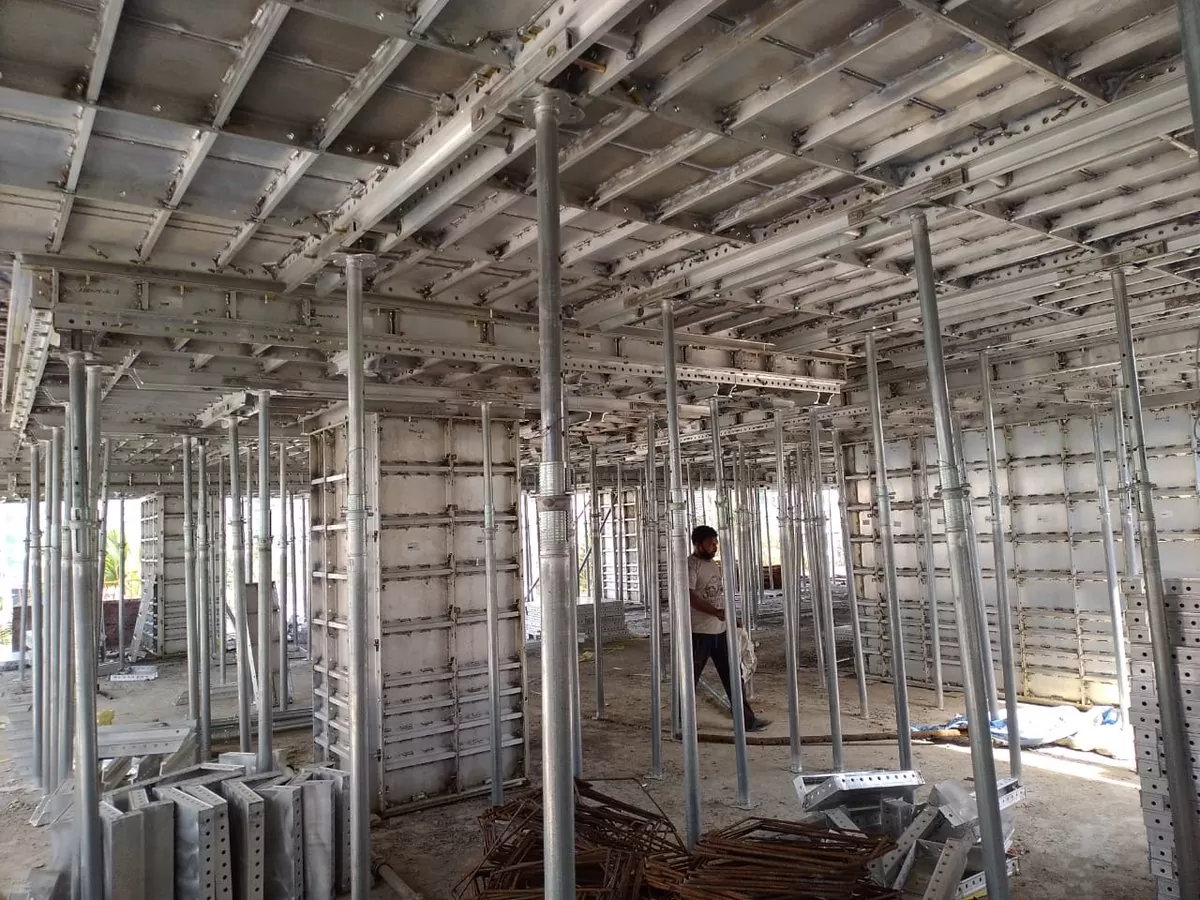
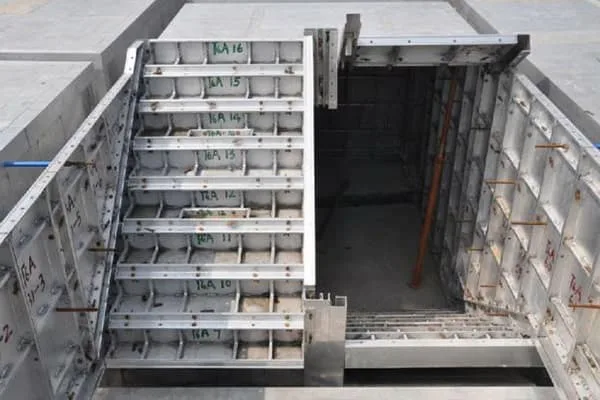
The Mivan shuttering process involves assembling pre-fabricated aluminium panels into a formwork system. These panels are made to measure and can be quickly assembled on site. The panels are then fixed to a concrete base, which forms the foundation of the building. After that, the walls, floors, slabs, and other components are built using the same formwork system. Once the concrete is poured and cured, the formwork is removed, and the aluminium panels can be reused on other projects.
Mivan shuttering parts name, components & material list
Mivan shuttering is a construction technique used to build concrete structures quickly and efficiently. Here are the names of the various components and materials used in Mivan shuttering:

| Part | Purpose |
|---|---|
| Wall and deck panels | Form the faces of walls and the underside of slabs. |
| Beam-side and soffit panels | Shape the sides and underside of beams where the system includes them. |
| Corners and junction pieces | Connect panels at changes in direction and wall-to-slab junctions. |
| Pins and wedges | Lock adjacent panel edges together. |
| Wall ties | Maintain the spacing between the two wall faces during the pour. |
| Props and prop heads | Support the deck assembly as specified in the formwork design. |
| Kickers and working brackets | Locate the next wall lift and provide working access where specified. |
Concrete, reinforcement, plumbing sleeves and waterstops belong in the project material schedule alongside the formwork inventory. Ask the formwork supplier for the panel layout and component schedule for the actual floor plan.
The Construction Skill Development Council of India describes aluminium panel assembly, pin-and-wedge connections and supporting prop heads in its Shuttering Carpenter handbook.
Related component guides: prop · Shear Wall: The shear wall is a type · reinforce the concrete
These are the various components and materials used in Mivan shuttering.
Advantages of Mivan Shuttering
Mivan shuttering offers several advantages over traditional construction methods. These include:
1. Speed
Mivan shuttering allows for faster construction, as the formwork is pre-fabricated and can be quickly assembled on site. The cycle time depends on repetition, crew training, concrete strength development and the approved stripping sequence.
2. Cost-Effective
Mivan shuttering reduces the need for skilled labor, as the pre-fabricated formwork system can be easily assembled by unskilled workers. This can result in significant cost savings, as the labor costs are reduced.
3. High-Quality Finishing
Mivan shuttering provides high-quality finishing, as the formwork system is made to measure and can be precisely aligned. This results in a smooth and even finish, with no need for plastering or polishing.
4. Durable
Mivan shuttering provides a durable and long-lasting construction, as the formwork system is made of aluminium, which is resistant to corrosion and rust.
Applications of Mivan Shuttering
Mivan shuttering is used in a wide range of applications, including:
1. Residential Construction
Mivan shuttering is widely used in the construction of high-rise buildings, residential complexes, and apartments. This technique allows for faster construction and provides high-quality finishing, making it an ideal choice for residential projects.
2. Commercial Construction
Mivan shuttering is also used in the construction of commercial buildings
Mivan Shuttering vs Traditional Construction Methods
Mivan shuttering offers several advantages over traditional & conventional shuttering methods, such as:
1. Faster Construction
Traditional construction methods require more time and labor, as the formwork is built on site, which can lead to delays and increased costs. In contrast, Mivan shuttering allows for faster construction, as the formwork is pre-fabricated and can be quickly assembled on site.
2. Better Quality
Mivan shuttering provides a better quality finish than traditional construction methods, as the formwork system is made to measure and can be precisely aligned. This results in a smooth and even finish, with no need for plastering or polishing.
3. Cost-Effective
Mivan shuttering can be more cost-effective than traditional construction methods, as it reduces the need for skilled labor, which can result in significant cost savings.
4. Environmentally-Friendly
Mivan shuttering is more environmentally-friendly than traditional construction methods, as it reduces the amount of waste generated during the construction process.
Challenges in Implementing Mivan Shuttering
While Mivan shuttering offers several advantages, there are also challenges in implementing this technique. These challenges include:
1. Initial Investment
The initial investment required for Mivan shuttering can be higher than traditional construction methods, as the formwork system must be pre-fabricated and transported to the construction site.
2. Limited Flexibility
Mivan shuttering provides limited flexibility in terms of design changes, as the formwork system is pre-fabricated and cannot be easily modified on site.
3. Skilled Labor
While Mivan shuttering reduces the need for skilled labor, it still requires trained workers who can assemble the formwork system correctly.
Future of Mivan Shuttering
Mivan shuttering is a growing trend in the construction industry, and its use is expected to increase in the coming years. The advantages of Mivan shuttering, such as faster construction, cost-effectiveness, and high-quality finishing, make it an attractive option for builders and contractors. As technology continues to advance, Mivan shuttering is likely to become even more efficient and cost-effective.
Conclusion
Mivan shuttering is a cutting-edge construction technique that offers several advantages over traditional methods. Its benefits include faster construction, cost-effectiveness, high-quality finishing, and durability. However, there are also challenges in implementing Mivan shuttering, such as initial investment, limited flexibility, and the need for skilled labor. Despite these challenges, Mivan shuttering is expected to become increasingly popular in the construction industry and shape the future of construction technology. Check permissible built-up area for your project with our FAR / FSI calculator.
What is Mivan shuttering?
Mivan shuttering is a construction technique that involves the use of aluminum formwork systems to build concrete walls, floors, slabs, beams, and columns.
What are the advantages of Mivan shuttering?
The advantages of Mivan shuttering include faster construction, cost-effectiveness, high-quality finishing, and durability.
What are the applications of Mivan shuttering?
Mivan shuttering is used in residential and commercial construction projects, such as high-rise buildings, residential complexes, apartments, and commercial buildings.
What are the challenges in implementing Mivan shuttering?
The challenges in implementing Mivan shuttering include initial investment, limited flexibility, and the need for skilled labor.
What is the future of Mivan shuttering?
Mivan shuttering is expected to become even more efficient and cost-effective as technology continues to advance, and its use is expected to increase in the coming years.

Tanmay Arora, is an Architect with an experience of 13+ years. He is a Management Grad with a post Graduate Diploma in Building Construction and Materials. Tanmay has worked with renowned firms. He has graduated in Bachelor of Architecture. His deep interest in Architecture and Civil Engineering and his experience has made him one of the best architects a client can think of.