
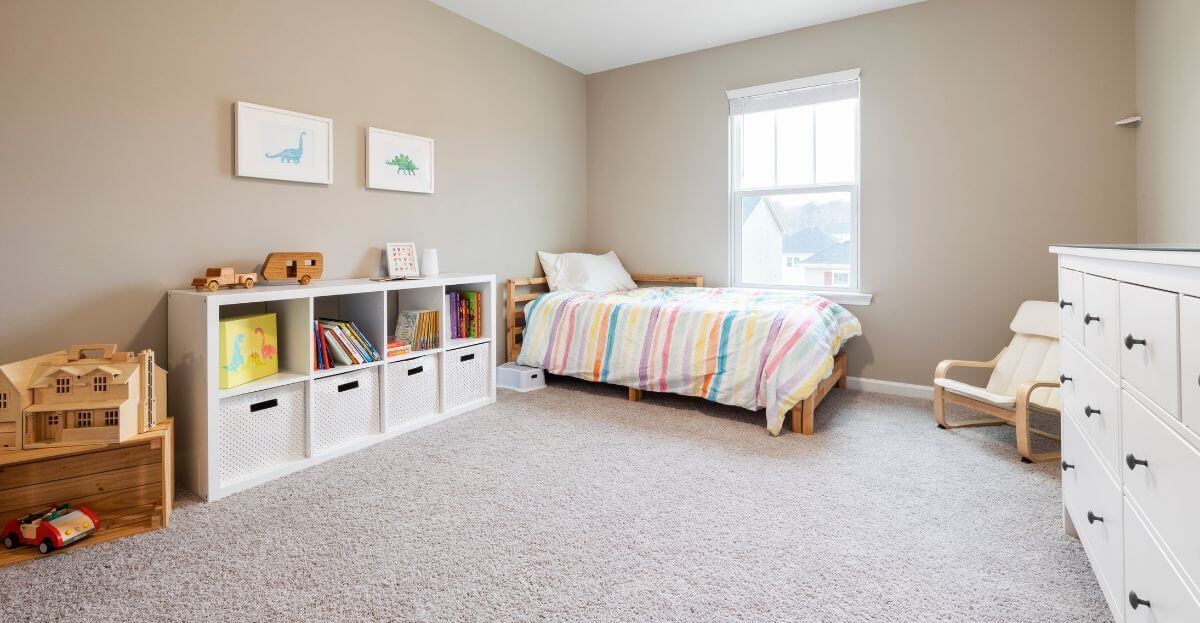
Designing a Child’s Bedroom for Sleep
Children’s bedrooms are usually designed as play spaces that happen to contain a bed. That is a reasonable use of the room for eleven hours a day and works against it for the other thirteen. A few decisions at the design stage make settling noticeably easier, and most of them cost little.
Light is the strongest lever
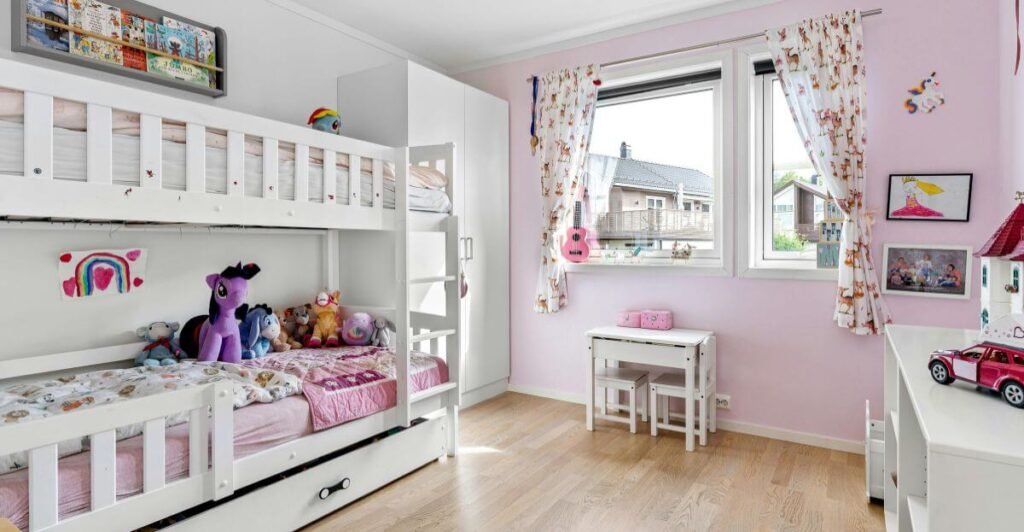
Light exposure is the primary input to the body’s circadian timing, and children are, if anything, more sensitive to evening light than adults. Three separate problems to solve:
Evening light in the room. Bright overhead lighting in the hour before bed delays settling. Put the main ceiling light on a dimmer, or better, do not rely on it in the evening at all — a low lamp at reading height is enough for a story and signals the end of the day far more clearly.
Light from outside. Blackout is worth doing properly. Blinds fitted inside the recess leak light down both sides; a blackout curtain mounted outside the recess with generous overlap works far better than an expensive blind fitted badly.
The night light. If one is needed, keep it dim and low to the floor. Warm colours are the convention; the more important variable is intensity.
Sound and temperature
A consistent low background sound masks the irregular noises that wake children — a door, a car, a sibling. Consistency matters more than the type of sound; something that cycles or changes volume draws attention rather than masking it.
On temperature, sleep research consistently favours cooler rooms, in the region of 16–20 °C. Children’s rooms are frequently kept warmer than adults’ on the assumption that they feel the cold more, which generally works against settling.
Layout decisions
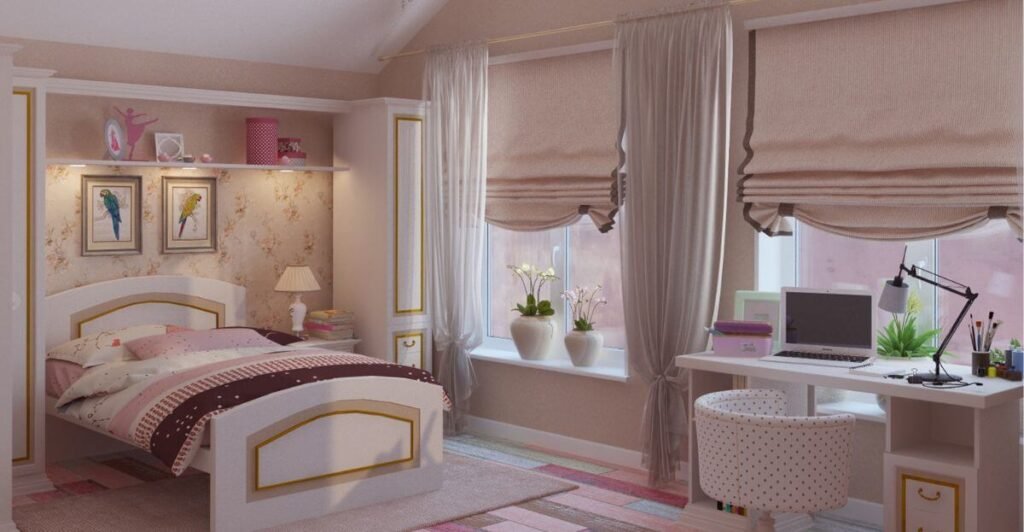
| Decision | Why it matters |
|---|---|
| Bed away from the door | Less disturbance from hallway light and movement |
| Bed against a wall, not under a window | Draught, light and noise all concentrate at the window |
| Closed storage for toys | Visible toys are an invitation; doors solve it |
| A reading spot near the bed | Keeps the last step of the routine in the room |
| Clear floor between bed and door | Night navigation without waking fully |
The closed-storage point is the one families most often skip and most often regret. A child lying in bed looking at an open shelf of toys is being asked to ignore them, which is a lot to ask.
Keeping screens out of the room
The recommendation to keep televisions, tablets and phones out of children’s bedrooms is one of the few in this area with broad professional consensus. The mechanisms are cumulative: light exposure, mental stimulation, and the simple fact that a device in the room is available at 2am.
Designing the room so there is no obvious place for a screen is more effective than a rule, because it removes the negotiation. Practical alternatives for the wind-down period are set out in this guide to screen-free bedtime.
Rooms shared between siblings
Two children with different bedtimes in one room is the hardest case. Partial separation helps — a curtain, a bookcase used as a divider, or simply positioning the beds so the children are not facing each other. Individual reading lights let one settle while the other reads.
Staggering bedtimes by twenty minutes generally works better than trying to settle both simultaneously, provided the earlier child is genuinely asleep before the second arrives.
When the room is not the problem
Environmental fixes help at the margin. A child who will not settle despite a dark, quiet, cool room is usually dealing with timing, overtiredness or anxiety rather than the physical space, and those are addressed differently — this guide on a child who won’t settle at bedtime covers the behavioural side. Redecorating is the fun solution to a problem that is often somewhere else.