
Smart LED Luminaires for Flexible Home Lighting
Smart LED luminaires let one ceiling fixture change brightness and colour temperature through the day. In a home, that is useful only if the lighting plan is settled first: which zones need light, where the fixtures sit on the ceiling, and how the wiring and switches reach them. This guide treats smart luminaires as part of interior lighting design, not as a gadget added after the painter leaves.
Start with lighting layers, not fixtures
Interior designers usually plan three layers of light in a room:
- Ambient light for general movement and cleaning. This is where a smart ceiling luminaire usually sits.
- Task light for reading, cooking, studying or dressing. It needs to be brighter and placed close to the work surface.
- Accent light for texture walls, niches, art, shelves or a stair. It is low in output but sets the mood of the room.
A smart fixture that dims and shifts from warm to cool white can cover part of the ambient and task needs, but it cannot replace a reading lamp at the bed or under-cabinet strips in a kitchen. Plan the layers on the furniture layout first, then decide which of them should be smart.
Colour temperature by room
Colour temperature is measured in kelvin (K). Warm white (around 2700–3000 K) feels relaxed and suits bedrooms and living rooms in the evening. Neutral white (around 4000 K) suits kitchens, study tables and bathrooms where colours need to read correctly. Cool white (5000 K and above) is common in Indian homes but looks harsh at night in living spaces. Adjustable-white (tunable CCT) smart luminaires are worth their cost mainly in rooms that change use through the day, such as a living-dining space or a bedroom with a work desk.
Brightness should be judged in lumens, not watts. Recommended illumination levels for different rooms are set out in the lighting section of the National Building Code (Part 8); check the room against those values before choosing a single fixture as the main light source for a large room.
Ceiling planning: RCC slab or false ceiling
Most Indian homes have an RCC roof slab. Surface-mounted smart luminaires suit this condition because they fix directly to the slab and need only one light point. The point has to be in the right place, though, and that is decided before the slab is cast: the electrician lays the conduit and junction box in the slab reinforcement. Moving a light point later means chasing the slab or running surface conduit.
Where a false ceiling is planned, recessed and cove lighting become possible and wiring can be rerouted more easily. Check the depth of the ceiling void, leave access panels near drivers and controllers, and make sure heat from the fixtures can escape. For more layout ideas, see these ceiling design examples.
Room-by-room planning notes
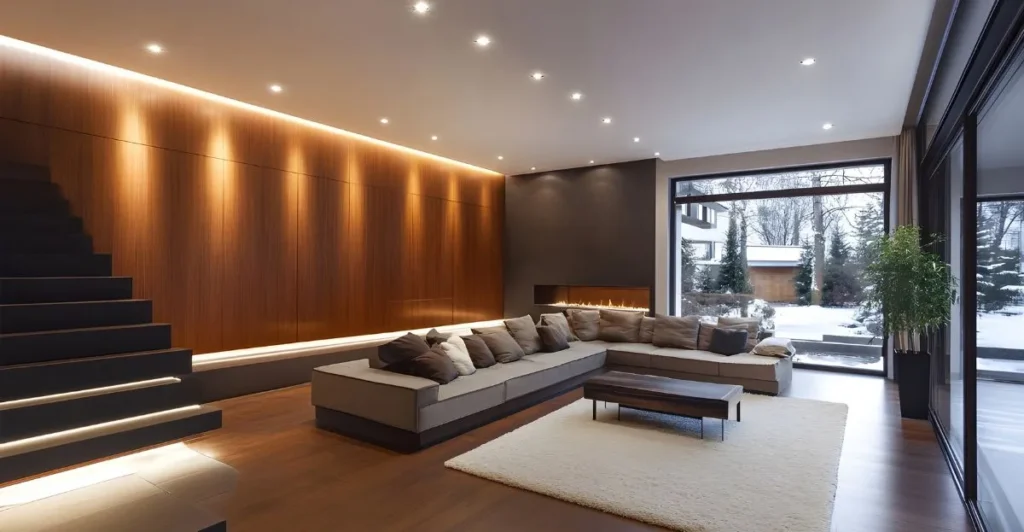
Living room. One central smart luminaire handles general light; add wall washers or cove lighting for texture walls and a floor or table lamp near the sofa. Scenes such as “TV” and “guests” are where smart control earns its keep.
Bedroom. Keep the ceiling light on a dimmer or warm scene for the evening, and put separate reading lights on each side of the bed with switches reachable from the bed.
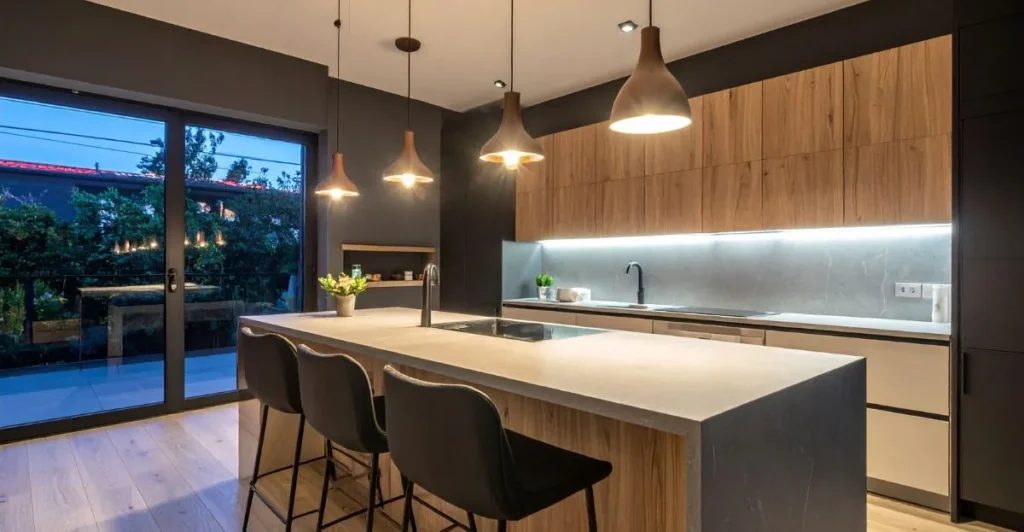
Kitchen. Ceiling light alone casts the cook’s shadow on the counter. Task light under the wall cabinets matters more than the fixture on the ceiling.
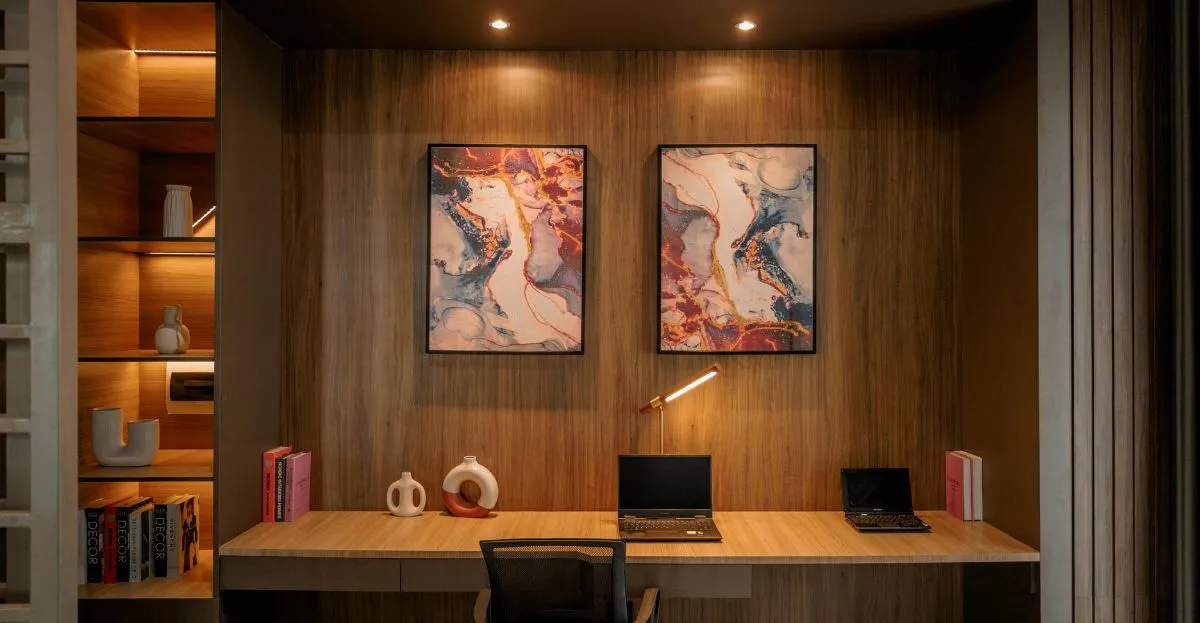
Home office or study. Neutral white at the desk, placed to the side rather than behind the person, avoids glare on the screen.
Wiring, switches and control
Smart luminaires are usually controlled by Wi-Fi, an infrared remote or a smart-home app. Three practical points for the electrical layout:
- Keep a wall switch. The light should still work for family members and guests who do not use the app. Tell the electrician whether the switch will cut power or only send a signal, because cutting power disconnects a Wi-Fi fixture.
- Check Wi-Fi coverage. RCC walls and slabs weaken the signal. A fixture in a far bedroom may need a mesh node or repeater.
- Use one platform. In rooms with several smart fixtures, one app and one set of scenes is easier to live with than a mix of remotes.
Power supplies, controllers and LED strips for cove or under-cabinet lighting should be chosen with the luminaires, with a location for every driver that a technician can reach later. Voltage fluctuation is common in many Indian cities, so check the input voltage range on the product sheet.
For product specifications of one range of smart ceiling luminaires (control options, shapes and adjustable white or RGB modes), see https://leduastore.com/smart-luminaires/
Checklist before ordering
- Furniture layout drawn, with ambient, task and accent zones marked.
- Light points fixed on the slab drawing before casting, or a false ceiling planned.
- Fixture diameter suited to the room size and ceiling height.
- Lumen output checked against the room, not only wattage.
- Colour temperature range decided per room.
- Wall switch behaviour, Wi-Fi coverage and the control app agreed.
- Driver and controller locations accessible for service.
A smart luminaire works best as one part of a planned lighting scheme. Get the layers, light points and switching right first; the fixture choice then becomes a short, easy decision.

Tanmay Arora, is an Architect with an experience of 13+ years. He is a Management Grad with a post Graduate Diploma in Building Construction and Materials. Tanmay has worked with renowned firms. He has graduated in Bachelor of Architecture. His deep interest in Architecture and Civil Engineering and his experience has made him one of the best architects a client can think of.